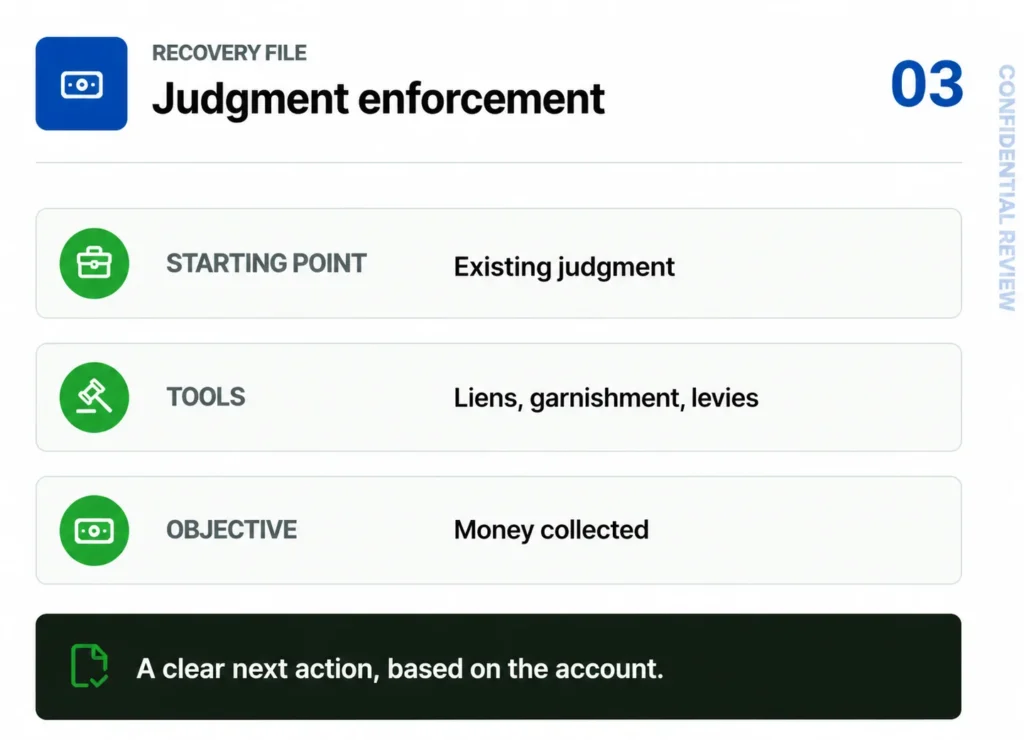
Liens, garnishment, and levies can help turn the court’s decision into money collected through a focused post-judgment recovery process.
How it moves forward
Winning a judgment does not automatically produce payment. Post-judgment work focuses on the lawful recovery tools available after the court has decided the matter.
Begin with the judgment and the information available about the debtor and the matter.
Determine which post-judgment tools—such as liens, garnishment, or levies—fit the circumstances.
Use the selected recovery path to move from a court decision toward money collected.
Where this service fits
This stage is focused on enforcement—not proving the debt again, but pursuing the recovery options the judgment makes possible.
Existing unpaid judgments
Lien opportunities
Garnishment matters
Levy-based recovery
Why act now
Post-judgment recovery puts the court’s decision into motion through the enforcement tools suited to the matter.
Share the situation and discuss the next appropriate recovery step.
The full recovery path